

At the end of 2025, messages began to spread from the Croatian government that the time had come to put order in the area of banking levies, which are called fees. When I tried to find out about the news at the bank, I immediately heard the raised and determined voice of the employee. I felt like I was in elementary school again. Digitization of banking business came to the bankers as ordered for this kind of “haircut of the people”. Everything is going like clockwork with fewer employees, and the levy is not individually so large that the consumer herd would stir. On such occasions, state television usually invites a representative of private banks to give their opinion. This time it was a female character. Otherwise, the owners of foreign banks do not like this kind of desecration of their business. Practice has shown that it is best to stay away from the cameras while at the same time offering new “banking products” to clients. It is interesting that the bankers cannot find a male or female character who is not repulsive and rigid. It’s hard work, so it’s no wonder that the atmosphere was icy this time as well. When she was supposed to express her opinion on the proposals that banks should remove some fees from the beginning of 2026, the banker still had to show emotion and sigh self-pityingly: “Ah, everything is going over our shoulders again!” She added that banks work with a lot of capital, that it is a responsible job, and then they have to make good money.
The lady representing the banks did not explain why private banks have taken on almost all financial transactions in Croatia, it is a heavy burden. Did someone force them to do this or is it a matter of interest? The explanation is simple, banks still need a certain amount of real money for their daily operations. This is what deposits from legal entities and individuals that clients mostly keep in accounts or in term deposits are for, practically interest-free. Most people still think that the aforementioned deposits are collateral for the issuance of credit money because it does not occur to them that loans are just digital notes from the bank, but such debt must be repaid in real money, this time with interest. All that is needed for this alchemy is a “rule of law” that will force borrowers to repay the debt. It is not enough for the bank owners to use the aforementioned deposits, they also want to charge a separate fee for maintaining such an account. Furthermore, each transaction should be charged separately, even when the client, instead of the bank at the counter, performs this task at his own expense via the internet. Practically, clients change bank officers at their own expense, reducing the cost of doing business with banks and still need to pay fees for each transaction. This kind of banking arbitrariness offends the common sense of the average person, taking into account that banks make huge profits. These profits are later siphoned out of the country and usually end up in the exotic world of speculation, such as derivatives and other acrobatics that bring significantly higher profits than investing in the domestic economy.
A number of questions arise here:
How can banks have higher profits than companies that produce goods?
Their profits could never be higher than those in the production of goods and services.
When a company goes bankrupt, the state does not bail out its business. Why doesn’t the same principle apply to private bankers? Bank owners do not tolerate much government interference in their business, but when, due to poor business and speculation, they get into trouble, it is normal for the same state to bail them out by guaranteeing citizens the return of deposits up to a certain limit, and large banks need to be bailed out because they are too big to be let down. Such a practice is unthinkable when it comes to entrepreneurs in production. The laws of the market apply to some, but not to others. It should be made clear that this is not an academic debate, This is not about an academic debate, but about the balance of power between between the government and the bankers. The Romans would say: Quod licet Iovi, non licet bovi (What is permitted to Jupiter is not permitted to the ox).
We have seen that bankers act in unison when it comes to profit. On the other hand, the government should represent the common interests of citizens. For some unknown reason, during the foreign takeover of the banking system in Croatia, the Croatian Postal Bank was left alive. This bank is state-owned and the government can compete with private banks through it. But when it comes to banking fees, this state-owned bank has joined the private banks and does not want to give up the fee income. This only shows that we do not have some kind of national policy when it comes to the only state-owned bank. If we did, then private banking appetites would be more moderate. They would become more cooperative if the government dared to announce the transfer of their accounts to the state bank. There are other possibilities. The basic problem here is that the government cannot issue its own money and that it is just one of the clients waiting patiently in a long line for loans from private banks. It is difficult to expect any consensus in a politically divided country when it comes to a common national interest towards private banks.
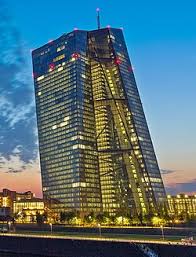
To this should be added that in the third term at the head of the Government is a politician who liquidated the national currency and that the governor of the so-called Croatian National Bank, who assisted in that great work, should become the vice president of the European Central Bank in Frankfurt.1 The latter should be understood as a sign of gratitude for a job well done in the banking province called Croatia and as a guide for future cadres on which path to take in order to deserve the earthly kingdom. And it is no coincidence that the headquarters of that kingdom are located in tall business towers high above the street noise. From that vantage point, the elected can from time to time look down at the human anthill. They can only laugh at the stupid ants who work tirelessly in the interest of the community, and they can also find satisfaction when they see a large number of ants who look up with longing and envy, wishing that they too could climb higher. Perhaps a better comparison would be with an beehive. Bees tirelessly produce, and a good beekeeper carefully collects a large part of their work.
In short, banks were forced to remove some levies, but simply increased others. Thus, nothing changed in their targeted profits. It remains unclear why the Minister of Finance needed to announce significant changes in bank levies in 2025. If he had kept quiet, the ugly financial reality would not have surfaced. Now the Minister of Finance does not have time to give an answer because his attention is more occupied by the appointment of the Vice President of the European Investment Bank in early 2026. And in his place comes the Vice Governor of the Croatian National Bank, who received his doctorate on the topic of the introduction of the euro and the liquidation of the national currency in the Republic of Croatia – C’est la vie.
One Serbian politician and intellectual commented in sarcastic style during a discussion on the introduction of the euro in Croatia:
“How nice of them, they decided to kill themselves, so let them have it.”
- It should be emphasized that Croatia did not have a real currency even before the formal liquidation of the kuna. The kuna was only a unit of account with an unfavorable exchange rate against the euro, and all attempts by individual politicians and professionals to change this were silently rejected. In short, as long as the kuna formally existed, there was hope that one day it would be possible to activate a national currency that would serve national interests. Now it is only a theoretical possibility [↩]
No Comment! Be the first one.